
What’s the main difference between acrylic and enamel pins?
Acrylic pins are printed designs on clear or coloured acrylic, cut to shape and usually finished with an epoxy or acrylic top layer. Enamel pins are metal badges where coloured enamel is filled into recessed areas, then polished for a smooth, weighty finish.
An Acrylic Pin typically favours speed, colour detail, and low cost, while enamel pins favour longevity, prestige, and a classic collectible feel.
Which type looks more premium in person?
Enamel pins usually look and feel more premium because they are metal, heavier in hand, and have that jewellery-like shine. They also tend to photograph well in lifestyle shots because the plating catches light in a distinctive way.
Acrylic pins can still look high quality, especially with clean cutting and a glossy top coat, but they usually read as more “printed merch” than “collectible badge”.
Which is better for detailed art and gradients?
Acrylic pins are better for highly detailed illustrations, small text, and gradients because the artwork is printed. That means full-colour images, shading, and photographic-style effects can be reproduced without extra complexity.
Enamel pins are better for bold, simplified designs with clean boundaries. They can handle detail, but tiny lines and gradients are harder, and usually require extra techniques or compromises.
Which lasts longer with daily wear?
Enamel pins generally last longer because the metal base and filled enamel are tough and scratch-resistant compared to printed surfaces. They can still chip or scratch, but they usually age more gracefully.
Acrylic pins are durable enough for casual use, but printed layers can scuff over time, and edges can show wear sooner, especially if they knock against keys, zips, or other pins.
How do they compare on weight and comfort?
Acrylic pins are lighter, which can be more comfortable on thinner fabrics or accessories like tote bags, lanyards, and caps. Their lightness also reduces fabric sagging.
Enamel pins are heavier and can pull on lightweight materials if the backing is weak. Many people like the heft, but it suits jackets, denim, backpacks, and structured bags better.
Which is cheaper, and what affects the price?
Acrylic pins are usually cheaper because they involve printing and laser cutting rather than metal moulds and enamel filling. Price still depends on size, thickness, special finishes, and whether there’s a protective top coat.
Enamel pins cost more, particularly at low quantities, because they often require mould setup and multiple production steps. Plating choices, number of colours, and special effects can increase the total quickly.
Which is faster to produce?
Acrylic pins are typically faster, making them a common choice for short deadlines, event merch, and limited runs. Printing and cutting can be turned around quickly.
Enamel pins often take longer because of mould creation, plating, enamel filling, and polishing. Shipping timelines can also be less flexible, especially during busy manufacturing periods.
What finishes and effects are possible with each?
Enamel pins offer classic finishes like gold, silver, black nickel, rose gold, and coloured metal plating. They can also include effects such as glitter enamel, glow-in-the-dark, translucent enamel, and screen-printed details on top.
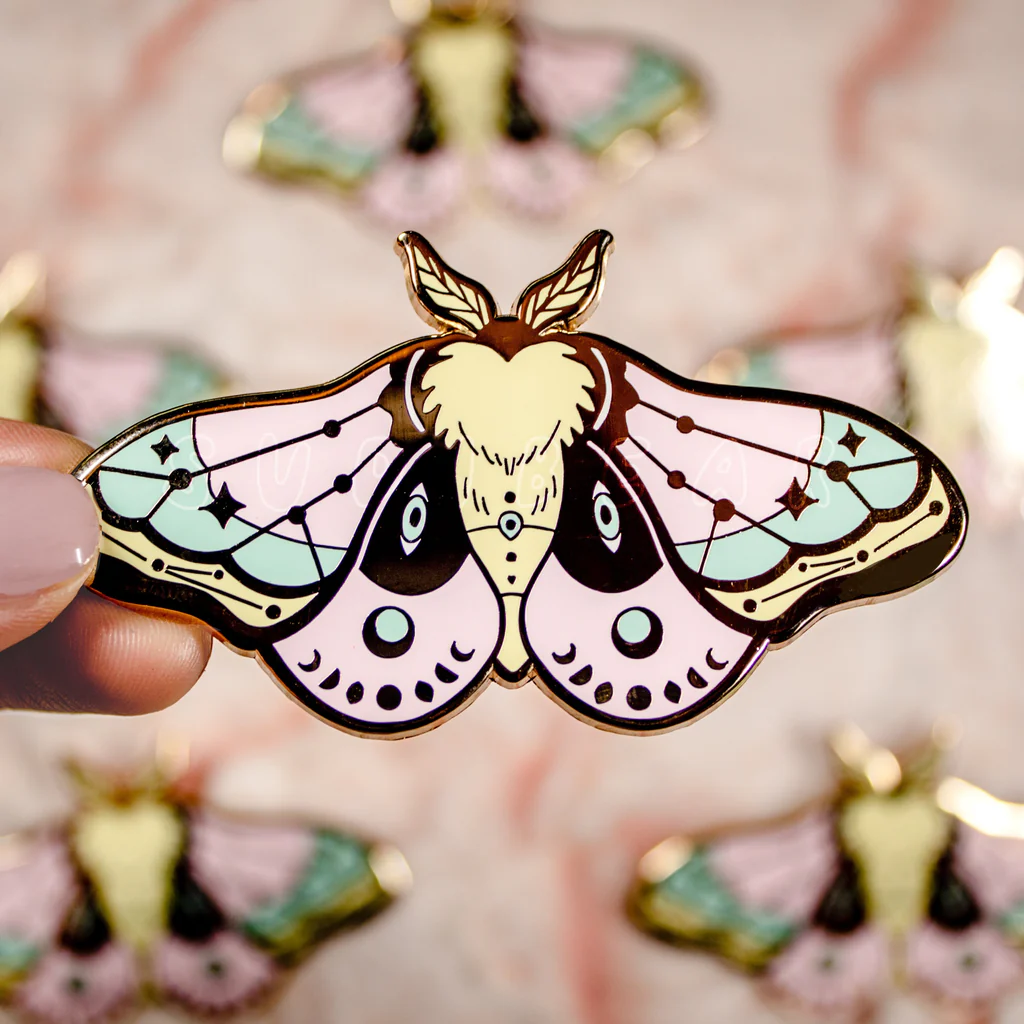
Acrylic pins can use clear acrylic, coloured acrylic, holographic or glitter acrylic, and layered builds for a pseudo-3D effect. They also support shaped edges easily, which helps when a design needs a unique silhouette. See how to select a custom acrylic pin supplier.
Which is better for eco considerations?
Neither option is perfectly “green”, but the differences are worth noting. Acrylic is plastic-based and not biodegradable, while enamel pins use metal, which is recyclable in theory but not always recycled in practice due to mixed materials like backings and plating.
If sustainability is a priority, they can reduce impact by ordering only what will sell, choosing minimal packaging, and favouring durable products that people keep for years rather than quick trends.
Which is better for artists, shops, and brand merch?
Acrylic pins suit artists who want to offer full-colour designs, experiment with styles, or release frequent drops without high upfront costs. They also work well for fan art, illustrated characters, and designs where gradients are essential.
Enamel pins suit brands and creators who want a flagship product, collector appeal, or a premium look for gifting. They are often the better pick for logos, icons, and designs that rely on bold shapes and clean lines.
What should they choose for gifts, events, or fundraising?
For corporate events, conferences, and large giveaways, acrylic pins often make sense because they’re affordable, quick, and easy to match to full-colour branding. They can also be made in larger quantities without the price feeling painful.
For gifts, supporter rewards, and “special” tiers in crowdfunding, enamel pins usually feel more meaningful because they have weight, shine, and long-term wearability.
How can they decide in 60 seconds?
If they need lots of colour, gradients, low cost, or fast turnaround, acrylic pins are usually the right choice. If they want a premium collectible, long-term durability, or a classic metal badge feel, enamel pins are usually the better option.
When in doubt, they can also split the range: acrylic for affordable everyday merch, and enamel for a limited edition “hero” pin.
FAQs (Frequently Asked Questions)
What are the main differences between acrylic pins and enamel pins?
Acrylic pins are printed on clear or coloured acrylic, cut to shape, and usually finished with an epoxy or acrylic top layer, favouring speed, colour detail, and affordability. Enamel pins are metal badges with coloured enamel filled into recessed areas and polished for a smooth, weighty finish, prioritising longevity, prestige, and a classic collectible feel.
Which type of pin looks more premium and why?
Enamel pins generally look and feel more premium due to their metal base, heavier weight, and jewellery-like shine. Their plating catches light distinctively in photos. Acrylic pins can appear high quality with clean cuts and glossy coats but often read as printed merchandise rather than collectible badges.
Which pin type is better suited for detailed artwork and gradients?
Acrylic pins excel at reproducing highly detailed illustrations, small text, and gradients because the artwork is printed directly onto the acrylic surface. Enamel pins are better suited for bold, simplified designs with clean boundaries as tiny lines and gradients are harder to achieve without extra techniques or compromises.
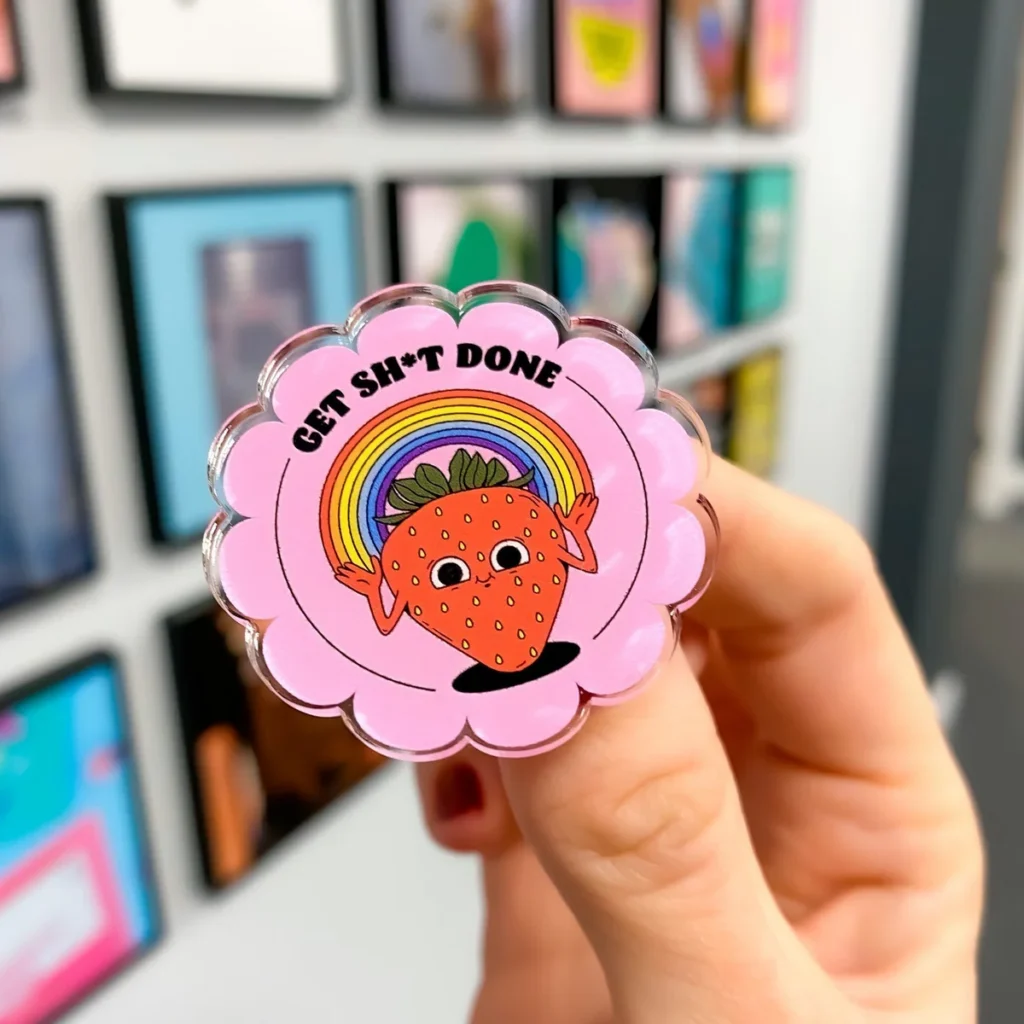
How do acrylic and enamel pins compare in terms of durability for daily wear?
Enamel pins typically last longer due to their tough metal base and scratch-resistant filled enamel that ages gracefully despite occasional chips or scratches. Acrylic pins are durable for casual use but can scuff over time as printed layers wear off and edges may show signs of wear when knocked against other objects.
Which pin type is more comfortable regarding weight and fabric compatibility?
Acrylic pins are lighter, making them more comfortable on thinner fabrics or accessories like tote bags, lanyards, and caps without causing sagging. Enamel pins are heavier and better suited to sturdier materials such as jackets, denim, backpacks, or structured bags where their weight adds a premium feel without damaging the fabric.
How do production speed and cost compare between acrylic and enamel pins?
Acrylic pins are usually cheaper and faster to produce since they involve printing and laser cutting without metal moulds or enamel filling. They suit short deadlines and large runs well. Enamel pins cost more due to mould setup, plating choices, enamel filling steps, special effects, and longer production times making them less flexible for quick turnarounds.